
Property Investment in Sharjah: A Complete Guide for Investors
Property investment in Sharjah has become an increasingly attractive option in the UAE, particularly for investors looking for competitive property prices, strong rental demand, and a market that can offer a more accessible entry point than higher-priced locations. Sharjah combines relatively affordable real estate with established residential demand, family-focused communities, expanding master developments, and convenient connectivity to Dubai. These factors have strengthened interest among buyers searching for investment property in Sharjah, whether their objective is generating rental income, building a long-term property portfolio, or achieving future capital appreciation. If you are considering buying property in Sharjah, this guide explains the areas, property types, investment strategies, rental considerations, and risks you should evaluate before making a decision. Why Is Property Investment in Sharjah Worth Considering? There are several reasons investors are paying more attention to the Sharjah real estate market. Competitive Property Prices and a Lower Entry Point One of Sharjah’s biggest advantages is accessibility. Investors searching for properties for sale in Sharjah can find a wide range of options, including: Apartments for sale in Sharjah Villas for sale in Sharjah Townhouses for sale in Sharjah Off-plan properties in Sharjah Ready properties for investment Family-focused residential communities Compared with more expensive segments of the UAE property market, the lower entry cost can make it easier for investors to build a portfolio without committing excessive capital to a single unit. This is particularly relevant for buyers looking for an investment property in Sharjah with a manageable initial investment. Strong Rental Demand and Attractive Rental Yield Potential For income-focused investors, rental yield in Sharjah is one of the most important considerations. Sharjah benefits from several sources of rental demand. The emirate is home to universities, educational institutions, established family communities, business districts, and residents who commute between Sharjah and Dubai. Demand is supported by: Universities and education zones Families looking for larger homes at competitive prices Employees working in Dubai but living in Sharjah Long-term residents seeking established communities Growing demand around new master developments Because of this, investment apartments in Sharjah can be particularly attractive to investors seeking recurring rental income. Studios and one-bedroom apartments can perform well in areas where affordability, education, employment, and connectivity are major demand drivers. Sharjah’s Strategic Location Near Dubai Location continues to be one of Sharjah’s strongest advantages. Many property buyers actively search for Sharjah close to Dubai or the best areas in Sharjah near Dubai because commuting convenience has a direct impact on tenant demand. A property with straightforward access to Dubai-bound roads, major highways, schools, employment areas, shopping destinations, and daily services may be easier to rent than a similarly priced property in a less connected location. For investors, accessibility should therefore be part of the investment calculation rather than simply a lifestyle consideration. Long-Term Property Investment Potential Investors focused on capital preservation may also consider long-term property investment in Sharjah. Rather than selecting a property purely because of a low launch price, long-term investors should focus on communities where infrastructure, amenities, retail, schools, landscaping, connectivity, and population growth are likely to support future demand. A well-selected property can potentially benefit from both rental income and future capital appreciation as the surrounding community matures. Investment Opportunities in New Sharjah Projects New developments are creating additional opportunities across the emirate. Investors may explore projects offering apartments, villas, and townhouses with different payment structures and community concepts. Before investing in any new project, buyers should evaluate the developer, payment plan, construction timeline, expected service charges, location, competing supply, and realistic rental demand. Best Areas for Property Investment in Sharjah Choosing the right area can determine a large part of your investment performance. Investors searching for the best areas for property investment in Sharjah should compare communities according to tenant profile, connectivity, property type, future development, purchase price, and expected rental demand. Aljada – A Modern Community for Families and Young Professionals Aljada Sharjah has become one of the emirate’s best-known master communities. Its modern residential environment, retail facilities, landscaping, leisure areas, and lifestyle infrastructure make it relevant to both end-users and investors. Aljada may suit investors looking to: Buy an apartment in Sharjah for investment Target long-term rental demand Invest in a modern master-planned community Purchase property in an integrated residential community in Sharjah Explore apartments in Aljada for investment The combination of residential, commercial, leisure, and everyday facilities within one development can make master communities particularly attractive to tenants who value convenience. Muwaileh – Strong Demand Around Education and Residential Hubs Muwaileh Sharjah is another popular location for apartment investment. Its proximity to schools, universities, retail facilities, and key roads supports demand from students, professionals, couples, and families. Investors frequently search for: Apartments for sale in Muwaileh Sharjah Investment apartments near universities Studios for sale in Sharjah One-bedroom apartments in Sharjah Affordable property investment in Sharjah For investors prioritising rental liquidity, smaller apartments may deserve particular attention because their lower rent and purchase price can appeal to a broader tenant pool. Al Zahia – Villas and Townhouses for Family-Focused Investment Al Zahia Sharjah is better suited to investors looking at larger homes and family-oriented communities. Typical opportunities include: Villas for sale in Sharjah Townhouses for sale in Sharjah Gated communities in Sharjah Larger family homes Long-term residential investment The investment strategy here differs from studio or one-bedroom apartment investment. Instead of targeting maximum tenant turnover, an investor may focus on stable family occupancy, larger layouts, community quality, and long-term value. Masaar – Green Community Living Masaar Sharjah has attracted attention from buyers interested in greenery, privacy, villas, townhouses, and community-focused living. Projects built around landscaping, open spaces, recreation, and family facilities can appeal strongly to end-users. That matters to investors because long-term capital growth is often connected to genuine end-user demand. A community people genuinely want to live in can have stronger resale and leasing prospects than a project selected purely on launch price. Sharjah Garden City – Villas, Privacy and Larger Spaces Sharjah Garden City is another option for buyers interested in larger
Cheapest Apartments in the UAE: Affordable Dubai Properties
As property prices continue to rise across the country, finding the cheapest apartments in the UAE has become increasingly important for first-time buyers, residents and property investors. Affordable property does not necessarily mean compromising on location, design or amenities. Several residential developments in Dubai combine competitive starting prices with modern facilities, strategic locations and flexible payment plans. For investors, these projects can provide an accessible entry point into the Dubai property market. For end users, they offer an opportunity to own a modern home without carrying the full financial burden at the beginning of the purchase. This guide explores some of the most promising affordable apartments for sale in Dubai, including projects in Majan, Dubai Land Residence Complex, Jumeirah Village Triangle and Dubai Production City. Although affordable homes are available in several emirates, including Ajman, Sharjah and Ras Al Khaimah, the projects in this guide are concentrated in Dubai because of the city’s wide selection of off-plan properties and developer-backed payment plans. Prices, unit availability, discounts and payment plans are subject to change. Buyers should always request the latest quotation, payment schedule and official project documents before making a reservation. Best Affordable Apartment Projects in Dubai 1. Jade Tower by Tiger Properties Jade Tower is an attractive option for buyers searching for affordable apartments in Majan, Dubai. Developed by Tiger Properties, the 28-storey residential tower combines contemporary architecture, modern facilities and accessible pricing. It is located in Majan, a growing residential community within Dubailand that offers connectivity to several established destinations across the city. The project may appeal to investors looking for low-cost off-plan apartments in Dubai, as well as end users seeking a modern residence in a developing neighbourhood. Its competitive positioning and flexible payment structures allow buyers to distribute their property payments rather than paying the full purchase price immediately. Jade Tower Payment Plan Based on the available offer, buyers may choose between the following payment options: 80/20 Payment Plan 80% payable during construction 20% payable at handover 70/30 Payment Plan 70% payable during construction 30% payable at handover Certain payment schedules may also be extended over two years, providing additional flexibility for buyers managing their property investment cash flow. A cash discount of up to 20% may be available on selected units and offers. Buyers should confirm the applicable discount, unit price and payment conditions before booking. 2. Samana Ivy Gardens Samana Ivy Gardens is a nature-inspired residential project located in Dubai Land Residence Complex, commonly known as DLRC. The development includes studios and apartments with contemporary layouts, while selected homes feature private swimming pools. The project is designed to combine landscaped surroundings, modern architecture and lifestyle amenities. For buyers searching for apartments with private pools in Dubai, Samana Ivy Gardens offers an alternative to conventional apartment living. The project’s location in DLRC may also appeal to buyers looking for affordable apartments in Dubailand, particularly those who prefer off-plan properties with long-term instalment structures. Samana Ivy Gardens Payment Plans The project offers structured payment options designed to reduce the amount buyers need to pay at one time. Option One 15% down payment at the time of booking 35% paid through monthly instalments of 1% 30% paid through monthly instalments of 0.5% 10% payable in the sixth month after booking 5% payable in the twelfth month 5% payable in the eighteenth month Option Two 15% down payment at the time of booking 35% paid through monthly instalments of 1% 25% paid through monthly instalments of 0.5% 10% payable in the sixth month 5% payable in the twelfth month 5% payable in the eighteenth month Any remaining balance under the second option should be confirmed against the developer’s latest official payment schedule. A cash discount of up to 25% may also be available on selected offers. The final discount will depend on unit availability and the payment method approved by the developer. 3. Weybridge Gardens 2 by LEOS Developments Weybridge Gardens 2 introduces a blend of French-inspired design and contemporary Dubai living. Located in Dubailand and developed by LEOS Developments, the project offers residences ranging from compact studios to larger apartments with up to three bedrooms. Interiors inspired by the charm of Provence, landscaped areas and lifestyle amenities give the project a distinctive identity. It may suit young professionals, couples, families and investors searching for affordable off-plan apartments in Dubai. With prices starting from approximately AED 570,000, Weybridge Gardens 2 provides a relatively accessible entry point for buyers who want to own a newly developed apartment in Dubai. Weybridge Gardens 2 Payment Plan Starting price: Approximately AED 570,000 50% payable during construction 50% payable at handover The straightforward 50/50 structure may be suitable for buyers who prefer to complete a substantial portion of their payments during construction while retaining the remaining amount until the property is delivered. 4. Cloud Tower by Tiger Properties Cloud Tower is located in Jumeirah Village Triangle, one of Dubai’s established freehold residential communities. Developed by Tiger Properties, the project consists of two connected residential towers featuring a selection of studios and apartments. The towers are linked at podium level, which includes parking areas, commercial spaces and supporting facilities. Its location near Sheikh Mohammed Bin Zayed Road provides convenient access to multiple areas of Dubai. This connectivity may appeal to residents who work in different business districts and investors targeting long-term rental demand. Buyers searching for affordable apartments for sale in JVT may consider Cloud Tower because of its residential facilities, location, and extended post-handover payment structure. Cloud Tower Payment Plan Based on the supplied offer, the payment schedule is structured as follows: 20% down payment 40% payable during construction 20% payable at handover 20% payable over two years after handover A cash discount of up to 8% may also be available on selected units. Post-handover payment plans can be attractive to buyers because they allow part of the purchase price to be paid after receiving the property. However, buyers should calculate the complete monthly commitment and confirm whether rental income alone would be
Dubai Land Department Fee Refund: Request a DLD Refund in Dubai
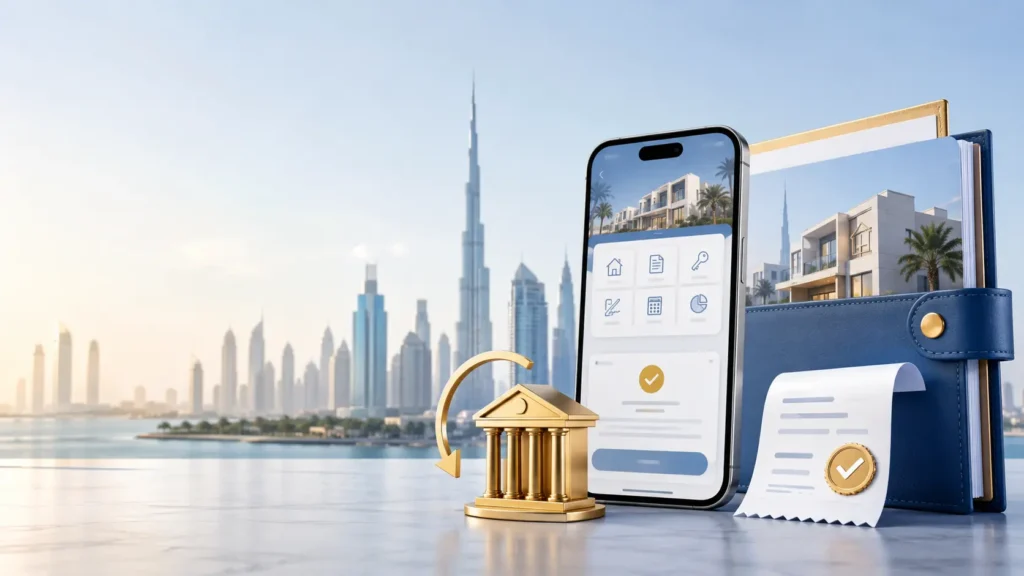
If you have paid fees to the Dubai Land Department (DLD) and later discovered that you may be entitled to receive all or part of the amount back, you can submit a DLD fee refund request through Dubai’s official digital channels. The Dubai Land Department provides a dedicated Fees Refund Request service that allows eligible individuals and companies to request a full or partial refund against a previously paid receipt voucher. The process can be completed digitally through the Dubai REST app or the official Dubai Land Department website, making it easier for property buyers, investors, owners and businesses to manage eligible refund requests without visiting a DLD office in most cases. According to the Dubai Land Department, the service covers eligible full or partial refunds connected to previously paid receipt vouchers. What Is the Dubai Land Department Fee Refund Service? The Dubai Land Department fee refund service is an online service designed for customers who have previously made a payment to DLD and believe that the payment, or part of it, is eligible for reimbursement. A refund can be either: A full DLD fee refund A partial DLD fee refund Submitting a request does not automatically guarantee that the money will be returned. The relevant authority reviews the receipt, transaction information, supporting documents, and the reason for the refund before determining whether the applicant is eligible. This distinction is especially important for property buyers searching for information about DLD fees in Dubai. Not every fee associated with buying or registering property is automatically refundable simply because a transaction changes or is cancelled. When Can You Request a DLD Fee Refund? There are several circumstances in which a customer may need to submit a Dubai Land Department refund request. Possible situations may include: Paying more than the amount required Accidentally paying the same fee more than once Cancellation of a transaction before the relevant procedure is completed An error in the payment or fee calculation A transaction linked to the receipt not being completed A refundable balance being identified after the transaction is reviewed Every case is assessed individually. For example, someone researching a Dubai property transfer fee refund should not assume that the standard property registration or transfer fee will automatically be refunded if a property deal falls through. The key question is whether the particular payment and transaction qualify for a refund under DLD’s review process. Documents Required for a Dubai Land Department fee refund Before starting your DLD refund request, prepare the supporting documents carefully. The Dubai Land Department officially lists the following core documents: Receipt voucher Bank account details These documents allow DLD to identify the original payment and determine where the approved refund should be transferred. 1. Receipt Voucher The receipt voucher is one of the most important documents in the application. Make sure that: The receipt is clearly visible The receipt number can be read The relevant payment information is complete The uploaded copy is not blurred or cropped Incorrect receipt information can delay the review of your application. 2. Bank Account Details You will also need to provide the bank details of the account to which the refund should be transferred if the application is approved. Check your information carefully, particularly: Account holder name Bank name IBAN Account details requested by the system Where applicable, the account information should correspond with the applicant or the party legally entitled to receive the refund. Depending on the circumstances, additional documents may also be requested to establish the applicant’s identity, explain the reason for the refund or confirm the authority of someone submitting the application on another person’s behalf. How to Request a DLD Fee Refund Through Dubai REST One of the easiest ways to submit a Dubai Land Department fee refund is through the Dubai REST app. Dubai REST is the official real estate application connected to Dubai Land Department services. Step 1: Open the Dubai REST App Launch the Dubai REST application and access the services section. Step 2: Find the Fees Refund Request Service Go to the Services menu and search for: Fees Refund Request Step 3: Select New Request Choose the option to create a new refund request. Step 4: Enter the Required Information Complete the application with accurate information relating to the original payment and receipt. Double-check important details such as the receipt number before moving forward. Step 5: Provide the Reason for the Refund Explain clearly why you believe the payment is eligible for a refund. Keep the explanation factual and concise. For example, if there was a duplicate payment, state that the same transaction was paid twice and provide the relevant receipt information. Step 6: Upload the Receipt Voucher Attach a clear copy of the receipt connected to the payment you want reviewed. Step 7: Add Your Bank Account Details Provide accurate bank information so that the funds can be transferred if the refund is approved. Step 8: Complete OTP Verification The system validates the user through an OTP sent to the registered mobile number or email address. Step 9: Review the Application Check: Receipt details Bank details Contact information Supporting documents Reason for requesting the refund Step 10: Submit the DLD Refund Request Once submitted, the request is sent for review and approval. DLD’s published procedure states that users are validated through mobile or email OTP, after which the request enters the financial approval process. If approved, the refund is transferred to the bank details supplied in the application. How to Track a Dubai Land Department fee refund Request? After submitting your application, you should receive a request reference number. Keep this number somewhere safe because it can be used to check your DLD refund status. To track an existing request through Dubai REST: Open the Dubai REST app. Go to Services. Select Fees Refund Request. Enter your refund request number. Select the search option. Review the application details and current status. The official DLD process confirms that the request number sent to the applicant’s mobile number
Apartments for Sale in Dubai with Payment Plans | Ready & Off-Plan 2026
Buying property in Dubai no longer means paying the entire purchase price upfront. For many homebuyers and investors, Dubai apartments for sale with payment plans have created a more flexible route into the property market. Instead of committing a large amount of capital at once, buyers can spread payments across construction milestones, handover, and, in selected developments, even the post-handover period. That flexibility has made searches for apartments for sale in Dubai, off-plan properties in Dubai, 1% monthly payment plans, and Dubai properties with low down payments increasingly relevant to buyers looking for a manageable entry point. But an attractive payment plan should never be the only reason to buy. The stronger property decision is the one that combines a sensible purchase price, the right location, a credible developer, realistic completion timelines, manageable service charges, rental demand and a payment structure that fits your cash flow. In this 2026 guide from Daark Real Estate, we look at how Dubai property payment plans work, where buyers can find suitable opportunities, what costs need to be considered and how to evaluate an off-plan apartment before paying a reservation fee. Quick Answer: Yes, you can buy an apartment in Dubai through a developer payment plan. A typical structure may include a booking amount, an initial down payment, instalments during construction and a remaining payment at handover. Some developments also offer post-handover payment plans. Why Are Dubai Apartments with Payment Plans So Popular? Flexible payment structures can reduce the amount of capital a buyer needs to deploy at the beginning of a property purchase. This is particularly relevant in the Dubai off-plan property market, where payments are commonly distributed across several months or linked to construction milestones. Rather than paying the full property price immediately, buyers may be able to enter the market using a smaller percentage of the total purchase price and complete the remaining payments gradually. Common advantages include: Lower initial capital requirements Payments distributed across predefined stages Selected projects with down payments starting from around 10% Monthly instalment options Post-handover payment plans on selected developments A wide choice of studios, 1-bedroom, 2-bedroom and family apartments Options suitable for both end users and property investors Freehold property ownership opportunities for eligible foreign buyers in designated areas However, a longer payment plan does not automatically mean a cheaper property. A unit offered through an extended instalment plan may carry a different total purchase price from a cash deal. Buyers should therefore compare the total property cost, not simply the monthly instalment or headline down payment. Best Apartments for Sale in Dubai with Payment Plans Dubai’s residential market offers payment-plan properties across communities including Jumeirah Village Circle (JVC), Dubailand, Dubai Land Residence Complex, Majan and Arjan. Below are several developments highlighted in Daark Real Estate’s project portfolio. Important: Property prices, availability, incentives, and developer payment plans are subject to change. Always request an updated official price list and payment schedule before making a reservation. 1. Binghatti Ruby – Jumeirah Village Circle (JVC) For buyers searching for apartments for sale in JVC Dubai, Binghatti Ruby provides a mix of studios and 1, 2 and 3-bedroom apartments. The project information referenced in this guide lists starting prices at approximately AED 695,000, with a 10% initial payment and further instalments extending toward handover. This type of property could appeal to: Buyers entering JVC with a mid-range budget Investors looking for studio or smaller apartment formats Buyers searching for Dubai property with a 10% down payment Investors comparing new-build apartments in JVC Buyers who prefer developments offering multiple apartment configurations JVC remains an important location to compare when researching affordable and mid-market apartments in Dubai because of the breadth of residential supply available within the community. 2. The Fifth Tower – JVC The Fifth Tower is another off-plan residential option in Jumeirah Village Circle, offering studios as well as 1 and 2-bedroom apartments. The project information used for the original guide lists prices from approximately AED 554,000, with reservations starting from a 10% down payment. That places the development within a price segment relevant to buyers searching for: Apartments for sale in Dubai under AED 1 million. Price alone, however, should not determine the purchase. Before selecting a unit, compare: Net apartment size Price per square foot Floor and orientation View Expected handover date Amount payable at handover Future supply of similar apartments in JVC A cheaper apartment can still represent weaker value if its price per square foot is significantly higher than comparable developments. 3. GreyGate Residences – JVC GreyGate Residences offers studios and 1-bedroom apartments alongside smart-home features and residential amenities. According to the project information referenced in the source article, prices begin at approximately AED 600,000, with an initial payment of around 20% and a portion of the property price continuing after handover. Why can a post-handover payment plan matter? A post-handover payment plan in Dubai may allow an investor to spread part of the financial commitment beyond completion. If the property is eligible for leasing after handover, this structure can potentially make cash-flow management more flexible. However, buyers should never automatically assume that rental income will pay the remaining instalments. Your calculation should also allow for: Annual service charges Property maintenance Leasing fees Possible vacancy periods Furnishing Property management expenses Unexpected repairs Rental income should therefore be treated as part of the investment model – not as a guaranteed repayment mechanism. 4. Peace Lagoons – Dubai Land Residence Complex Peace Lagoons provides studios as well as 1- and 2-bedroom apartments, together with residential amenities and smart-home features. The payment information referenced in the source article lists starting prices from approximately AED 739,000, a 20% initial payment, and a payment structure that includes 1% monthly instalments. This makes the development relevant to buyers searching for terms such as: 1% monthly payment plan Dubai Studio for sale in Dubai with payment plan Off-plan apartments in Dubailand Affordable apartments in Dubai Dubai apartments with flexible payment plans One point deserves particular attention. A low monthly instalment
How Much Does It Cost to Buy Property in Sharjah in 2026?
If you are planning to buy property in Sharjah in 2026, the purchase price is only one part of your total investment. Property buyers should also budget for Sharjah property registration fees, bank valuation charges, mortgage-related costs, legal expenses, administrative charges, and other property transaction fees. Understanding these expenses before signing a sales agreement can help you calculate the real cost of buying property in Sharjah and avoid unexpected expenses at the transfer stage. Quick Answer: What Are the Property Buying Fees in Sharjah? As a general budgeting rule, buyers should keep additional funds available above the advertised property price to cover registration and transaction-related expenses. The exact amount will depend on several factors, including: Property value Buyer category Cash or mortgage purchase New development or resale property Developer administrative charges Bank requirements Brokerage arrangements Government registration fees applicable to the transaction The Sharjah Real Estate Registration Department (SRERD) is the official authority responsible for property registration in the emirate. Therefore, buyers should verify the applicable government fee for their transaction before completing the purchase. Sharjah Property Registration Fees in 2026 One of the largest expenses when buying property in Sharjah is the government registration charge. The property transfer must normally be registered with the Sharjah Real Estate Registration Department (SRERD) to formally record ownership. Registration charges can vary according to the transaction and buyer classification, so they should not automatically be treated as one universal percentage for every property purchase. Buyers can use the official SRERD fee calculator or confirm the applicable amount with the registration department before completing a transaction. This is especially important because temporary incentives may occasionally reduce registration costs. For example, qualifying transactions completed during ACRES 2026 benefited from a 50% reduction in property registration fees. Additional Costs of Buying Property in Sharjah Government registration is not the only expense to consider. Depending on how the transaction is structured, a buyer may encounter several additional Sharjah real estate fees. 1. Property Valuation Fee If you are purchasing a property using a mortgage, the bank will normally arrange an independent valuation. The purpose of the valuation is to determine whether the property provides sufficient security for the mortgage amount requested. The valuation cost varies between banks, property types and valuation companies. Cash buyers generally do not require a bank valuation unless they want one for investment or due-diligence purposes. 2. Mortgage and Bank Charges Buyers financing their purchase should consider more than just the deposit. Potential mortgage-related expenses can include: Bank valuation fees Mortgage processing fees Mortgage registration charges Insurance requirements Banking and transfer fees For this reason, the cost of buying a property in Sharjah with a mortgage can be higher than purchasing the same property entirely in cash. Always request a full mortgage fee schedule from the bank before accepting the finance offer. 3. Legal and Conveyancing Costs Legal assistance is not required for every straightforward transaction, but many investors prefer professional support when purchasing higher-value, resale or more complex properties. A property lawyer or conveyancing professional may help review: Sale and Purchase Agreement Ownership documentation Payment obligations Existing liabilities Developer conditions Mortgage documentation Transfer requirements Legal fees vary considerably depending on the complexity of the transaction and the scope of work. 4. Property Inspection A professional inspection can be particularly valuable when purchasing a ready property in Sharjah. An inspector may identify issues involving: Electrical systems Plumbing Air-conditioning Walls and ceilings Water leakage Fixtures and fittings General finishing quality Although an inspection increases the upfront buying cost, discovering significant defects before completing the transaction can potentially save considerably more money later. 5. Developer and Administrative Fees Some properties may involve additional administrative charges from the developer or other parties involved in the transaction. These may include documentation, clearance, ownership transfer, or other administrative services. Because these charges differ between developments, buyers should request a written breakdown before signing the agreement. Example: Buying a AED 500,000 Apartment in Sharjah Suppose you are considering a 2-bedroom apartment for sale in Sharjah priced at AED 500,000. Your budget should not stop at AED 500,000. A sensible purchase calculation would look like this: Property purchase price: AED 500,000 Plus: Applicable SRERD registration and transfer costs Bank valuation fee if financing the purchase Mortgage and banking charges where applicable Legal or conveyancing fees if used Property inspection costs Developer or administrative charges Brokerage commission where applicable Your actual acquisition cost is therefore: Property Price + Government Fees + Financing Costs + Transaction Expenses = Total Property Acquisition Cost This approach gives buyers a much more accurate picture than comparing properties using the advertised selling price alone. Are There Property Taxes in Sharjah? One of the reasons investors consider Sharjah real estate investment is the UAE’s comparatively tax-efficient property environment. Buyers should distinguish, however, between a recurring property tax and transaction-related government fees. Purchasing a property can still involve registration charges and other transaction expenses even where there is no conventional annual property tax charged on the purchase itself. Owners should also budget for ongoing costs after buying, particularly: Service charges Property maintenance Utilities Insurance where applicable Property management fees for investment properties These costs can directly affect your net rental yield in Sharjah. Do Foreigners Pay Property Buying Fees in Sharjah? Foreign investors can purchase eligible properties within the areas and developments where foreign ownership is permitted under Sharjah’s property regulations. Anyone considering buying property in Sharjah for foreigners should verify two separate points before paying a reservation fee: 1. Is the property legally available for their nationality and ownership structure? 2. What registration fee applies to that particular transaction? Do not assume that the rules or fees applicable to one buyer automatically apply to another. The safest approach is to confirm the transaction directly through the developer, licensed brokerage, and SRERD before transferring substantial funds. Can You Reduce the Cost of Buying Property in Sharjah? Some property purchase expenses are government or institutional charges and cannot simply be negotiated away. However, buyers can potentially reduce their
How to Buy Property in Sharjah: Complete 2026 Guide for Foreign Buyers
Buying property in Sharjah has become an increasingly attractive option for UAE residents, overseas buyers and investors seeking more space, competitive prices and access to modern master-planned communities. The emirate offers everything from affordable studios and family apartments to townhouses, waterfront homes and luxury villas. However, a successful purchase begins with more than finding an appealing listing. Buyers need to understand foreign ownership rules, approved investment areas, registration procedures, financing, service charges and the difference between off-plan and ready property. This guide explains how to buy property in Sharjah in 2026, including the buying process, expected costs, freehold areas, mortgage options and the factors that can influence rental yield and long-term value. Why Buy Property in Sharjah? Sharjah combines relative affordability with family-oriented communities, strong road connections and growing residential supply. It can appeal to buyers who work in Dubai but want a different balance of price, space and lifestyle. The market also entered 2026 with substantial momentum. Sharjah recorded AED 65.6 billion in real estate trading value during 2025, its highest annual total, according to the Emirates News Agency. This represented a 64.3% increase from AED 40 billion in 2024. Common reasons buyers explore Sharjah real estate include: More space at a competitive price compared with many neighbouring locations A growing selection of freehold and investment-zone developments Off-plan properties with flexible payment plans Established demand from families and commuters Modern communities with schools, parks, retail and leisure facilities Opportunities for rental income and capital appreciation Apartments, townhouses, villas and waterfront property across different budgets These advantages do not mean every property is automatically a good investment. Returns depend on the purchase price, occupancy, service charges, financing cost, property condition and future supply in the same community. Can Foreigners Buy Property in Sharjah? Yes. Foreign nationals can buy property in Sharjah within designated areas and approved developments, subject to the ownership structure and registration rules applicable to the individual property. Sharjah expanded property ownership rights in 2022. The legal framework allows non-UAE and non-GCC nationals to acquire full ownership in specified real estate projects and areas. At the same time, some properties may instead be offered through long-term usufruct or leasehold rights. This distinction is important. Buyers should not assume that every property advertised in Sharjah is freehold. Before paying a reservation fee or deposit, obtain written confirmation of: Whether the property is freehold, leasehold or usufruct Whether the project is approved for foreign ownership Whether the buyer’s nationality is eligible for that particular ownership structure Whether the unit can be registered with the Sharjah Real Estate Registration Department Whether any resale, assignment or developer restrictions apply UAE residency is not generally required to purchase an eligible property, although residency status can affect mortgage availability, loan-to-value limits and the documents requested by a bank. Popular Freehold and Investment Areas in Sharjah The best area to buy property in Sharjah depends on the buyer’s goal. An investor seeking tenant demand may make a different choice from a family looking for a villa or an overseas buyer interested in an off-plan payment plan. Aljada Aljada is a large mixed-use destination offering apartments, family amenities, retail, entertainment and business space. Buyers frequently search for apartments for sale in Aljada because the community combines newer inventory with a master-planned environment. Suitable for: modern urban living, off-plan investment and long-term rental demand. Muwaileh and Al Mamsha Muwaileh is popular with families and commuters due to its schools, services and access to major roads. Al Mamsha adds pedestrian-friendly living, retail and contemporary apartments to the wider area. Suitable for: apartments, family tenants, ready and off-plan property, and buyers seeking access toward Dubai. Tilal City Tilal City is a mixed-use community with villas, townhouses, apartments and plots. It is regularly considered by buyers looking for freehold property in Sharjah and larger family homes. Suitable for: end users, villas, townhouses and longer-term investment. Sharjah Sustainable City Sharjah Sustainable City focuses on energy-conscious design, landscaped areas and family living. It attracts buyers searching for villas for sale in Sharjah within a planned, sustainability-led community. Suitable for: families, villa buyers and buyers who value environmental features. Maryam Island and Al Khan These areas appeal to buyers interested in waterfront property in Sharjah, apartment living and access to leisure destinations. Prices can vary considerably depending on the project, view, completion status and unit specification. Suitable for: waterfront apartments, lifestyle buyers and furnished rental strategies. Al Majaz and Al Nahda Al Majaz and Al Nahda are established residential districts with access to shops, schools and daily services. Stock may include older resale apartments as well as renovated units, so building quality and service charges require careful review. Suitable for: ready apartments, end users and buyers comparing established neighbourhoods. Other projects and areas may permit foreign ownership, but eligibility should always be checked at project and unit level before proceeding. Property Types Available in Sharjah The Sharjah property market serves a wide range of budgets and strategies. Studios for Sale in Sharjah Studios can offer a lower entry price and may appeal to single professionals or first-time investors. Compare the usable floor area, parking allocation, service charges and realistic annual rent rather than choosing solely on the advertised price. Apartments for Sale in Sharjah One-, two- and three-bedroom apartments are widely available across new and established communities. One-bedroom apartments can suit investors and couples, while two-bedroom apartments often attract families and may have a broader tenant pool. Townhouses and Villas for Sale in Sharjah Townhouses and villas provide larger layouts, outdoor space and greater privacy. They are particularly relevant to end users and family tenants, although the total purchase price, maintenance cost and potential rental yield may differ from apartments. Off-Plan Properties in Sharjah Off-plan property is purchased before construction is completed. It may provide a lower initial payment, developer incentives or instalment plans, but the buyer must assess construction progress, the developer’s track record, escrow arrangements, handover expectations and resale rules. Ready-to-Move-In and Resale Property A ready property can be inspected
How to Buy Property in Dubai from Egypt? 2026 Guide
Thinking about buying property in Dubai from Egypt? You are part of a growing group of Egyptian buyers looking at Dubai for rental income, long-term capital growth, currency diversification, residency opportunities, and access to one of the world’s most active real estate markets. The good news is that Egyptian nationals can legally buy property in Dubai, even if they are not UAE residents. In many cases, the entire process can be managed with only limited travel to Dubai. This 2026 guide explains how to buy an apartment in Dubai from Egypt, including freehold ownership, off-plan vs ready properties, Dubai property prices, purchase fees, required documents, investor residency options, common risks, and the steps involved from reservation to title deed. Can Egyptians Buy Property in Dubai? Yes. Egyptian citizens can purchase and own real estate in Dubai in designated freehold areas available to foreign nationals. Freehold ownership means the buyer owns the property outright rather than simply holding a long-term lease. Subject to the applicable laws and property conditions, the owner can generally: Sell the property Rent it out Transfer ownership Leave it to heirs Use it as a primary or secondary residence You do not need to be an Emirati citizen or UAE resident simply to purchase a freehold property. For Egyptians researching Dubai property investment, this is one of the market’s biggest advantages: international buyers have access to a substantial range of apartments, villas, townhouses, and off-plan developments. Best Areas to Buy Property in Dubai from Egypt for Investors Choosing the right location depends on whether your priority is rental yield, capital appreciation, affordable entry prices, lifestyle, or long-term investment. Jumeirah Village Circle – JVC JVC is one of the most searched areas among buyers looking for affordable apartments for sale in Dubai. It offers a large selection of studios and one-bedroom apartments, relatively accessible entry prices, and strong rental demand. Indicative rental-yield estimates in Q1 2026 placed JVC at roughly 7.2%–8.1% gross, although actual returns vary significantly by building, unit, service charges and purchase price. Suitable for: rental investors, first-time Dubai buyers and mid-budget investors. Business Bay Business Bay remains one of Dubai’s most established investment districts, particularly for buyers looking for centrally located apartments close to Downtown Dubai. Indicative Q1 2026 gross rental yields were around 5.5%–6.5%. Suitable for: investors seeking central Dubai exposure, furnished rentals and long-term tenant demand. Dubai Marina Dubai Marina is one of the best-known locations for international property buyers in Dubai, supported by waterfront living, tourism demand and a mature rental market. Suitable for: holiday-home investors, end users and investors targeting internationally recognised locations. Downtown Dubai Downtown Dubai is home to Burj Khalifa and the Dubai Mall and remains one of the city’s major prime residential markets. Indicative gross yields were approximately 5.0%–6.2% in Q1 2026, although premium units can behave very differently depending on purchase price and property type. Suitable for: premium buyers, long-term capital positioning and luxury-property investors. Dubai South Dubai South continues to attract buyers looking for comparatively affordable properties and longer-term growth linked to infrastructure, logistics and the expansion around Al Maktoum International Airport. Suitable for: longer-term investors and buyers looking for lower entry prices than central Dubai. Dubailand Dubailand contains several large residential communities and is frequently considered by buyers searching for affordable property in Dubai and larger unit sizes. Palm Jumeirah Palm Jumeirah sits at the luxury end of the Dubai property market and is more appropriate for buyers prioritising premium positioning, waterfront lifestyle and scarcity rather than affordability. Expo City Dubai Expo City is developing into a mixed-use residential and commercial district and can appeal to investors taking a longer-term view on Dubai’s urban expansion. Read about: Terra Woods at Expo Living, Dubai by Emaar Properties Off-Plan vs Ready Property in Dubai: Which Is Better? One of the first decisions when investing in Dubai real estate is whether to buy an off-plan property or a completed property. Buying Off-Plan Property in Dubai An off-plan property is purchased before construction is completed, normally directly from a developer. Typical advantages include: Lower initial cash requirement Developer payment plans Potentially lower entry price than a comparable completed property Opportunity for capital appreciation before handover Access to newly launched projects and modern specifications Initial payments often vary by project and developer. Some launches may start around 10%–20%, while payment structures differ substantially across the market. Completion can take several years depending on the project. The main risks include construction delays, changing market conditions, and developer execution risk. For this reason, buyers should verify that the project is properly registered and that payments are being made through the project’s approved escrow account. Buying a Ready Property in Dubai A ready property is already completed. The main advantages are straightforward: You can inspect the actual unit Rental income can begin sooner The surrounding community is easier to evaluate Actual service charges and rental performance can be analysed Financing may be easier to compare Ready properties are particularly attractive for investors whose priority is immediate rental income in Dubai. Which Option Is Better? For buyers with a three-to-five-year investment horizon, a carefully selected off-plan property can provide attractive payment-plan flexibility and potential upside. For buyers prioritising immediate occupancy, immediate rental income, or a lower level of construction risk, a ready property may be more suitable. The decision should be based on the individual project rather than assuming that every off-plan property is a better investment. How to Buy Property in Dubai from Egypt: Step-by-Step? Step 1: Calculate Your Real Dubai Property Budget One of the most common mistakes buyers make is budgeting only for the advertised property price. You should also allow for: Dubai Land Department registration fees Real Estate Registration Trustee charges Broker commission where applicable VAT on service-provider fees Mortgage-related charges if financing Developer or NOC charges where applicable Annual service charges after purchase Dubai Land Department Fee The standard fee for registering a real-estate sale is 4% of the sale value. Dubai Land Department currently identifies the sale-registration
Dubai Property Prices 2026: Will the Real Estate Market Drop or Keep Growing?
Dubai property prices in 2026 have become one of the most closely watched topics among investors, homebuyers, and overseas property buyers. After several years of strong price growth across the Dubai real estate market, the key question has changed. Investors are no longer simply asking whether Dubai property is a good investment. They are asking: Will Dubai property prices fall in 2026? Is the Dubai real estate market heading for a correction? Should I buy property in Dubai now or wait? Which areas offer the best rental yield in Dubai? Is off-plan property in Dubai still a good investment? The answer is more nuanced than a simple yes or no. Dubai is moving into a more selective phase of its property cycle. Some locations are experiencing price corrections, while prime communities, high-quality developments, and properties supported by strong end-user demand remain comparatively resilient. Here is what investors need to know about the Dubai real estate market in 2026. Will Dubai Property Prices Fall in 2026? The short answer is: Dubai property prices are unlikely to move in the same direction across the entire market. Rather than a city-wide property crash, 2026 is increasingly becoming a two-speed real estate market. Some mainstream locations have already experienced softer asking prices and selective corrections, while premium and scarce properties have demonstrated greater resilience. Knight Frank reported in July 2026 that prices were easing across parts of Dubai’s mainstream residential market by approximately 5% to 20%, depending on location, while the luxury property sector continued to record exceptionally strong transaction activity. This means investors should avoid treating Dubai as one single property market. Performance can vary substantially according to: Community Developer Property type Supply pipeline Purchase price Rental demand Construction quality Payment plan Handover schedule Resale liquidity The investment question in 2026 is therefore not simply: “Will Dubai property prices drop?” A better question is: “Which Dubai properties are most likely to outperform during a more selective market?” Dubai Real Estate Market 2026: From Rapid Growth to Selective Performance The Dubai property market went through an extraordinary expansion cycle during the first half of the decade. Dubai recorded approximately 205,400 residential transactions in 2025, an increase of 18% year-on-year, while the total transaction value reached around AED 544.2 billion, according to Knight Frank. However, the market is now maturing. Instead of every area benefiting equally from rising prices, investors are seeing greater differentiation between locations and individual projects. Earlier forecasts from Knight Frank expected approximately 1% price growth in Dubai’s mainstream residential market during 2026 and around 3% in the prime segment. Later market developments have reinforced an important point: Location, scarcity and project quality matter more in 2026 than simply buying into Dubai’s overall growth story. Is the Dubai Real Estate Market Going to Crash? A correction and a crash are not the same thing. There is currently a stronger case for describing Dubai as a selective and increasingly competitive property market rather than assuming that every property will continue appreciating at the pace seen earlier in the cycle. Several structural factors continue to support Dubai real estate, including: Population expansion International wealth migration Economic diversification Strong rental demand Foreign investor participation High-net-worth individual migration Continued infrastructure investment Knight Frank has highlighted population growth, wealth migration and economic diversification among the fundamental drivers supporting Dubai residential demand. At the same time, investors cannot ignore increasing supply. More new residential projects are entering the market, meaning poorly located or overpriced developments could face considerably more pressure than scarce properties in established communities. This is why property selection is becoming more important than market timing. What Is Driving Dubai Property Prices in 2026? 1. International Demand for Dubai Real Estate Dubai continues to attract buyers and investors from Europe, Asia, the Middle East and other global markets. The city has developed into a major destination for international capital, entrepreneurs, professionals and high-net-worth individuals. This international buyer base helps diversify housing demand beyond domestic purchasers. Dubai’s ultra-luxury property market remains particularly strong. During the first half of 2026, 296 homes priced above US$10 million were sold, with total sales value reaching approximately US$5.1 billion. The performance demonstrates that demand remains particularly strong at the top end of the market, even while certain mainstream areas experience more price sensitivity. 2. Dubai’s Tax Environment Another major reason international investors consider buying property in Dubai is the UAE’s tax environment. Dubai does not impose the type of annual property tax commonly associated with residential ownership in several other major international property markets. For individual investors, the UAE also generally does not levy personal income tax on salary or personal rental income. However, buyers should remember that purchasing and owning property still involves costs such as: Dubai Land Department fees Agency commission where applicable Service charges Property management Maintenance costs Mortgage-related fees where applicable Therefore, investors should calculate net ROI rather than relying only on gross rental yield. Learn more about property investment in Dubai. 3. Dubai Population Growth Dubai’s expanding resident population remains another important long-term driver of the property market. More residents generally create additional demand for: Apartments Villas Family communities Long-term rentals Schools and retail Transportation infrastructure Residential communities near employment hubs For property investors, population growth is especially important because sustainable rental demand can support both occupancy and property values over the long term. 4. Rental Demand and Dubai Rental Yields High Dubai rental yields continue to make the city attractive to income-focused property investors. Rental returns vary significantly according to unit type, community, purchase price and operating costs. Indicative July 2026 data placed gross rental yields at approximately: JVC: 8.2% Dubai South: 7.8% Business Bay: 7.1% Dubai Marina: 6.4% Dubai Hills Estate: 5.9% Downtown Dubai: 5.6% Palm Jumeirah: 4.8% These are gross figures and should not be confused with net investment returns after service charges, vacancy, maintenance, and management expenses. Best Areas to Invest in Dubai in 2026 There is no single best area to invest in Dubai for every buyer. The right community
Dubai South Investment 2026: ROI, Growth & Top Projects
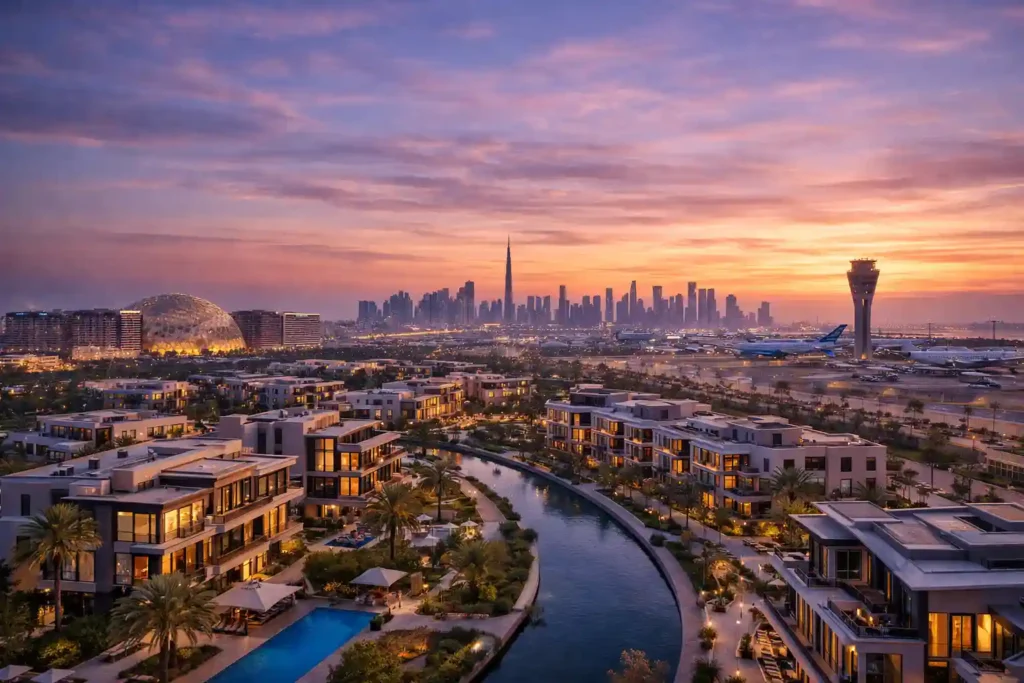
Dubai’s real estate market has evolved. We’re no longer in the “hype cycle” – we’re in the smart capital phase, where investors focus on timing, data, and long-term growth. Right now, Dubai South investment is emerging as one of the strongest and most strategic opportunities in Dubai’s real estate market. Why Dubai South Is Gaining Serious Investor Attention? Dubai South is not just another residential community – it’s a strategic growth corridor backed by infrastructure, government planning, and long-term economic vision. Key growth drivers include: Expansion of Al Maktoum International Airport (set to become one of the largest airports in the world) Continued development of Expo City Dubai Strong connectivity to major highways and logistics hubs If you’re still evaluating the broader market, read: Is Dubai Property Still a Good Investment in 2026? Expected ROI in Dubai South (2026 Outlook) Based on current rental trends in nearby communities and similar emerging zones in Dubai: Expected Rental Yield: 6% – 8% Capital Appreciation Potential: 8% – 12% (mid-term growth cycle) Downtown Dubai: 4% – 6% Dubai Marina: 5% – 6% Dubai South offers a rare balance of higher yield + early entry pricing + future growth potential Who Should Invest in Dubai South? Dubai South is not designed for every buyer – and that’s exactly what makes it powerful. Ideal for: Investors seeking strong rental returns Buyers targeting off-plan appreciation International investors entering the Dubai market Long-term portfolio builders Why Timing Matters in Real Estate? The biggest mistake investors make is entering too late. By the time an area becomes widely recognized: Prices have already increased Rental yields begin to compress High-return opportunities become limited If you want to understand how areas compare: Read: Dubai South vs JVC – Which Area Offers Better ROI in 2026? Investment opportunities in Dubai South One of the most promising Dubai South investment opportunities currently positioned in this zone is: Terra Woods – Expo City in Dubai Developed by Emaar Properties Why Terra Woods Stands Out? Located in Expo City / Dubai South growth corridor Developed by one of Dubai’s most trusted developers Community-focused master plan designed for long-term livability Positioned within a high-demand future residential zone Investment Perspective Entry pricing is still within the early-phase range Strong potential for rental demand growth High likelihood of capital appreciation as infrastructure develops Explore full project details here: Terra Woods – Expo City Investment Opportunity Payment Advantage Flexible payment plans suitable for investors Lower upfront commitment compared to prime areas Easier portfolio diversification Looking for more opportunities like this? Check: Best Off-Plan Projects in Dubai Dubai South Investment vs Other Investment Areas Area Rental Yield Entry Price Growth Potential Dubai South 6% – 8% Medium High JVC 7% – 9% Low Medium Downtown Dubai 4% – 6% High Moderate Dubai South offers a strategic balance between affordability and future upside Why Smart Investors Are Entering Now? Dubai South is currently in its early growth phase. That means: Lower entry prices Higher long-term upside Strong infrastructure expansion is still underway This is where real estate wealth is typically created – not after the market peaks. Secure the Best Investment Opportunities Early If you’re serious about investing in Dubai: Get 3 handpicked investment options in Dubai South based on your budget and goals Limited Window Opportunity Projects like Terra Woods are still in early launch stages. This allows investors to: Secure better unit selection Enter at lower prices Benefit from future appreciation As the area develops, entry prices are expected to rise. Start Your Investment Journey Today Ready to position yourself in one of Dubai’s fastest-growing areas? Contact Daark Real Estate: Get access to the best available units Receive ROI-based investment advice Discover off-market opportunities tailored to your budget Final Insight Dubai South investment is not a short-term trend – it’s a long-term strategic opportunity backed by infrastructure expansion, rising demand, and perfect market timing. Investors who understand timing…These are the ones who maximize returns.